

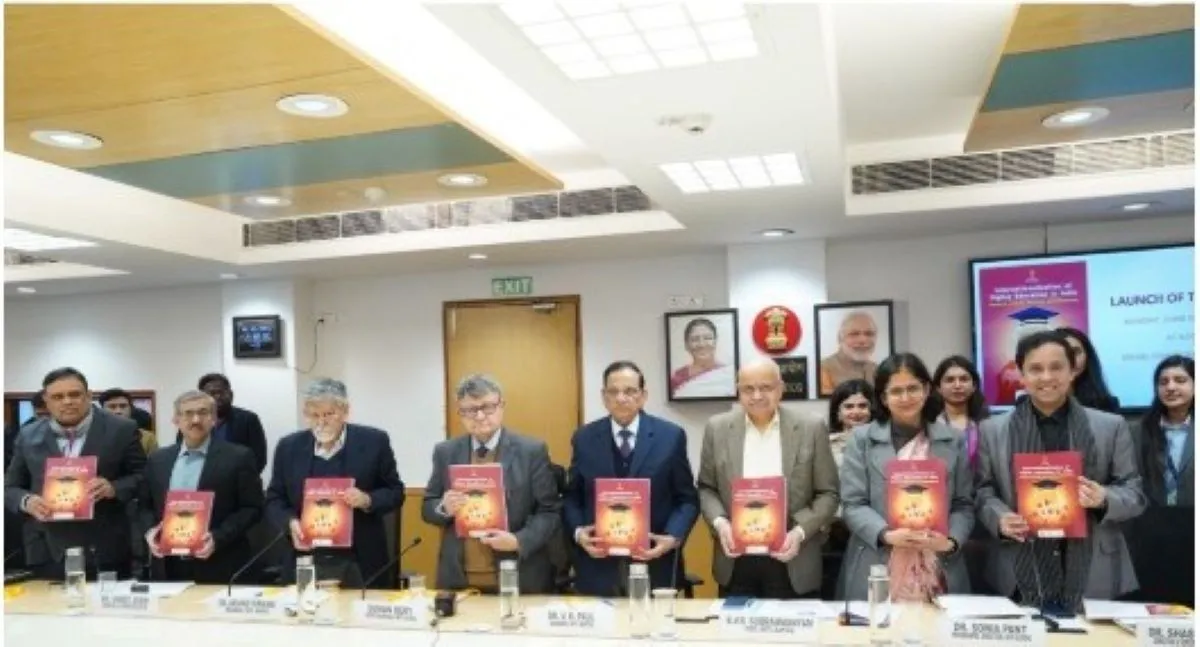
New Delhi: NITI Aayog has released a major policy report titled “Internationalisation of Higher Education in India: Prospects, Potential, and Policy Recommendations”, laying out a strategic roadmap to position India as a global hub for higher education and research. The report is aligned with the National Education Policy (NEP) 2020 and the vision of Viksit Bharat @2047.
The report was released by Shri Suman Bery, Vice Chairman, NITI Aayog, in the presence of Dr. V.K. Paul, Member (Education), Dr. Arvind Virmani, Member, and Shri B.V.R. Subrahmanyam, CEO, NITI Aayog. Senior education leaders including Dr. Vineet Joshi, Secretary, Department of Higher Education, Ministry of Education, and Prof. T.G. Sitharam, Chairman, AICTE, were also present at the launch.
Developed jointly by NITI Aayog and an IIT Madras–led consortium of knowledge partners, the report is positioned as a pioneering contribution from the Global South. It promotes the concept of “internationalisation at home”, focusing on enhancing global academic engagement within Indian institutions while strengthening domestic capacity.
The report examines internationalisation at global, national, and institutional levels, covering key areas such as student and faculty mobility, international academic and research collaborations, and the establishment of international branch campuses.
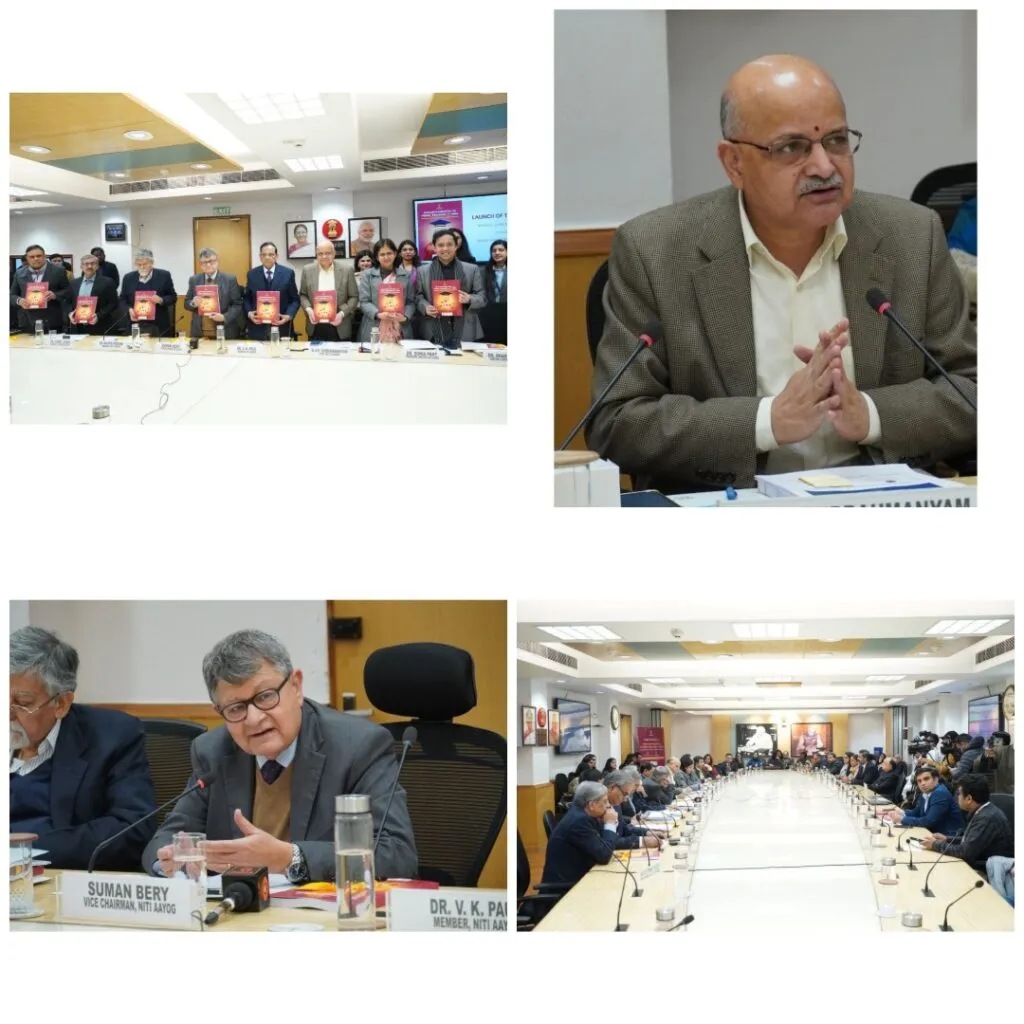
Based on extensive quantitative and qualitative research, the study draws inputs from 160 higher education institutions across 24 States, outcomes of a National Workshop at IIT Madras involving 140 national and international participants, and expert interviews with institutions from 16 countries.
To support effective implementation, the report outlines 22 policy recommendations, along with 76 action pathways and 125 performance success indicators across critical areas including strategy, regulation, financing, global branding, outreach, curriculum development, and institutional culture.
According to NITI Aayog, the proposed framework aims to significantly strengthen India’s global higher education footprint, research collaboration, international student engagement, and soft power, reinforcing its aspiration to emerge as a leading global education destination.