

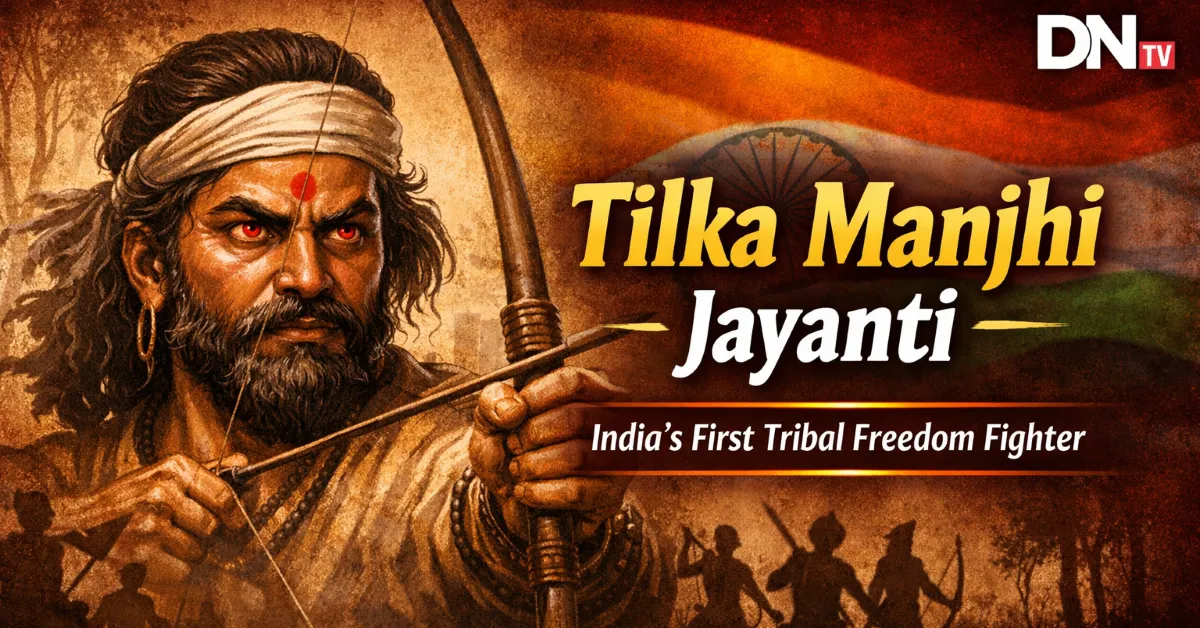
On February 11, the nation pays tribute to Tilka Manjhi, born in 1750, one of India’s earliest tribal freedom fighters who mounted a bold challenge to British colonial authority long before the Revolt of 1857.
Popularly known as Jabra Pahadia, Tilka Manjhi emerged as a fearless leader of the Adivasi resistance movement in the 18th century. At a time when the East India Company was tightening its grip over Indian territories through exploitative taxation and oppressive policies, he mobilized tribal communities to defend their rights, resources, and dignity.
In a daring act of defiance, Tilka Manjhi and his followers targeted the Company’s treasury in the Bhagalpur region (often referenced in historical accounts as Jagbalpur area) and redistributed the recovered wealth among marginalized tribal families. This bold move was not merely rebellion—it was a powerful assertion of social justice and economic self-respect.
His unwavering commitment to protecting Adivasi identity and autonomy earned him widespread respect across tribal villages. British officials referred to him as “Tilka Manjhi,” a name interpreted as “the one with fiery red eyes,” symbolizing his fierce resolve and uncompromising resistance.
Tilka Manjhi’s struggle reminds us that India’s freedom movement did not begin in 1857—it was shaped by countless unsung heroes from diverse communities who rose against injustice in different regions and eras. His life stands as a testament to courage, sacrifice, and the enduring spirit of resistance among India’s tribal communities.
As we remember Tilka Manjhi on his birth anniversary, we honor not just a revolutionary leader, but a symbol of indigenous pride and the early foundations of India’s freedom struggle.